Why Values-Based Investing Is Not Just for Activists or Environmentalists
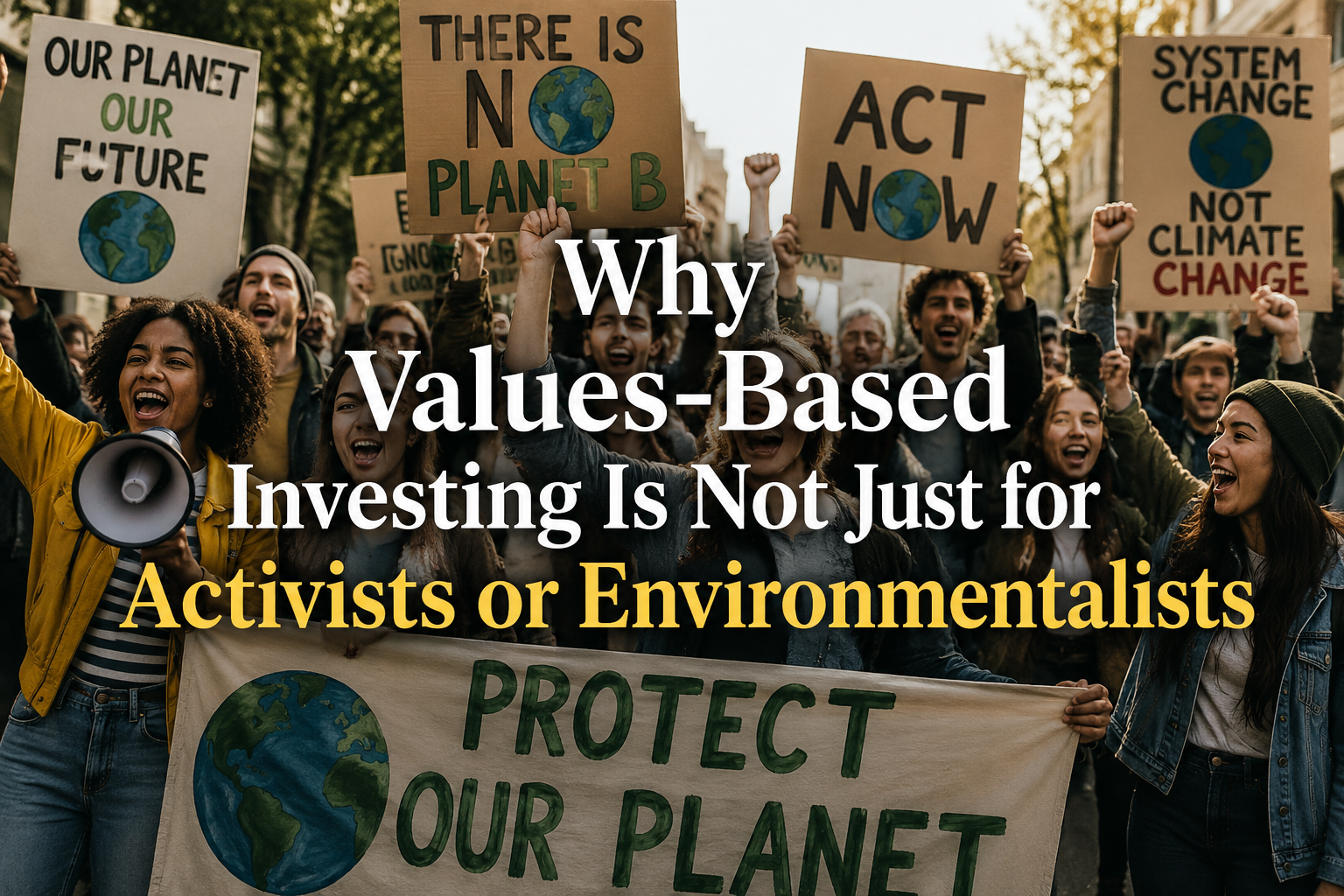
Why Values-Based Investing Is Not Just for Activists or Environmentalists
When many people hear the phrase impact investing, they may picture environmental campaigns, political movements, or activist organizations. We believe that perception may prevent many investors from exploring an approach that could potentially align their investments with their personal priorities.
In reality, impact investing is not limited to one political viewpoint, one generation, or one lifestyle. As we understand it, people from many different backgrounds may choose to consider the broader effects of their investments while also pursuing financial goals.
Whether someone cares about supporting local communities, improving healthcare access, advancing education, encouraging innovation, strengthening national security, promoting clean energy, or expanding affordable housing, impact investing can potentially provide a framework for considering how capital is allocated.
At Holistic Finance, we believe values-based investing is ultimately about intentionality. It is about asking whether your investment portfolio reflects what matters most to you while remaining part of a comprehensive financial strategy.
What Is Impact Investing?
One of the most widely recognized definitions comes from the Global Impact Investing Network (GIIN), which defines impact investments as:
"Investments made with the intention to generate positive, measurable social and environmental impact alongside a financial return."
Source Global Impact Investing Network, What You Need to Know About Impact Investing
According to the same resource, impact investing is characterized by intentionality, measurable outcomes, financial return expectations, and impact measurement. These characteristics help distinguish impact investing from other investment approaches.
Impact Investing Is Broader Than Politics
We believe one of the biggest misconceptions surrounding impact investing is that it belongs exclusively to one political ideology.
As we understand it, impact investing can potentially reflect a wide variety of personal beliefs and priorities, including:
- Faith based principles
- Community development
- Veteran owned businesses
- Affordable housing
- Medical innovation
- Education
- Rural economic growth
- Animal welfare
- Environmental stewardship
- Clean water
- Food systems
- Workforce development
- Local entrepreneurship
Every investor's priorities may look different.
Some investors may wish to avoid certain industries. Others may prefer actively supporting companies working toward outcomes they believe create long term value.
Neither approach necessarily requires political activism. Instead, we believe they represent personal choices about how someone wishes their investment capital to be deployed.
Impact Investing Is About Intentionality
The GIIN explains that intentionality is one of the defining characteristics of impact investing.
Specifically, the organization states:
"Impact investing is marked by an intentional desire to contribute to measurable social or environmental benefit."
As we understand it, this intentional approach may distinguish impact investing from simply purchasing investments that happen to produce positive outcomes incidentally.
For many investors, intentionality begins with asking questions such as:
- What industries am I helping finance?
- What products or services are the companies providing?
- Do these businesses align with my personal priorities?
- Are measurable outcomes being reported?
These questions may become part of a broader investment due diligence process.
You Do Not Have to Sacrifice Financial Goals
A common misconception is that investors must choose between earning returns and pursuing positive impact.
The GIIN's definition itself includes both objectives by describing impact investments as seeking measurable impact alongside a financial return.
That definition does not guarantee investment performance or outcomes. Every investment carries risk, including the possible loss of principal.
We believe investors should avoid assuming that any investment strategy will consistently outperform another simply because it incorporates impact considerations. Financial results can depend on numerous factors, including market conditions, diversification, security selection, risk tolerance, time horizon, and overall portfolio construction.
Impact Investing Can Look Different for Every Investor
There is no universal impact investing portfolio that we know of.
As we understand it, one investor may prioritize renewable energy, while another may focus on healthcare innovation. Someone else may care more about education, affordable housing, sustainable agriculture, financial inclusion, or technological innovation.
The GIIN notes that impact investments span many sectors, including:
- Healthcare
- Housing
- Infrastructure
- Sustainable agriculture
- Energy
- Microfinance
Because every investor's priorities differ, we believe a personalized investment process may be more valuable than relying on standardized labels alone.
Impact Investing May Be Part of Comprehensive Financial Planning
We believe impact investing works best when viewed as one component of a broader financial plan rather than in isolation.
A comprehensive financial strategy may also consider:
- Retirement planning
- Cash flow
- Tax planning
- Estate planning
- Risk management
- Insurance analysis
- Investment diversification
- Charitable giving
- Family goals
Impact investing may fit within that larger framework, depending on an individual's objectives and circumstances.
Rather than replacing sound financial planning, values-based investing could potentially complement it.
Asking Better Questions
We believe many investors never realize they have choices because they simply have not been encouraged to ask questions about their portfolios.
Questions that may be worth discussing with a financial professional include:
- What companies do I currently own?
- How are investments selected?
- Are there opportunities that better reflect my priorities?
- What tradeoffs might exist?
- How are risks evaluated?
- How is impact measured, if applicable?
These conversations may help investors gain greater clarity regarding both financial objectives and personal values.
Impact Investing Is Becoming More Mainstream
According to the GIIN, impact investing now involves many different types of investors, including:
- Individual investors
- Pension funds
- Banks
- Family offices
- Foundations
- Insurance companies
- Asset managers
As we understand it, this broad participation suggests that impact investing has expanded beyond a niche concept and is now considered by a diverse range of market participants.
That does not mean it is appropriate for every investor. Suitability should always depend on an individual's financial situation, goals, risk tolerance, investment objectives, and overall financial plan.
In The End
Values-based investing is not reserved for activists or environmentalists.
We believe impact investing may appeal to anyone who wants greater intentionality in how their investments align with their personal priorities while pursuing long term financial objectives.
For some investors, that could mean supporting innovation in healthcare. For others, it may involve community development, environmental stewardship, education, affordable housing, or other measurable outcomes that matter to them.
Ultimately, impact investing is not about telling investors what they should value. It can be about recognizing that every investor already has values, and thoughtfully exploring whether those values may have a place within a comprehensive financial strategy.
Disclosures
Advisory services are offered through Holistic Finance LLC, an SEC Registered Investment Adviser. Registration does not imply a certain level of skill or training.
This article is provided for educational and informational purposes only and should not be construed as investment, tax, or legal advice. All investments involve risk, including the possible loss of principal. Past performance does not guarantee future results. Individuals should consult qualified professionals regarding their specific circumstances before making financial decisions.
As with any investment decision, investors should carefully evaluate risks, objectives, costs, diversification, and suitability before making changes to their portfolio, preferably in consultation with a qualified financial professional.